


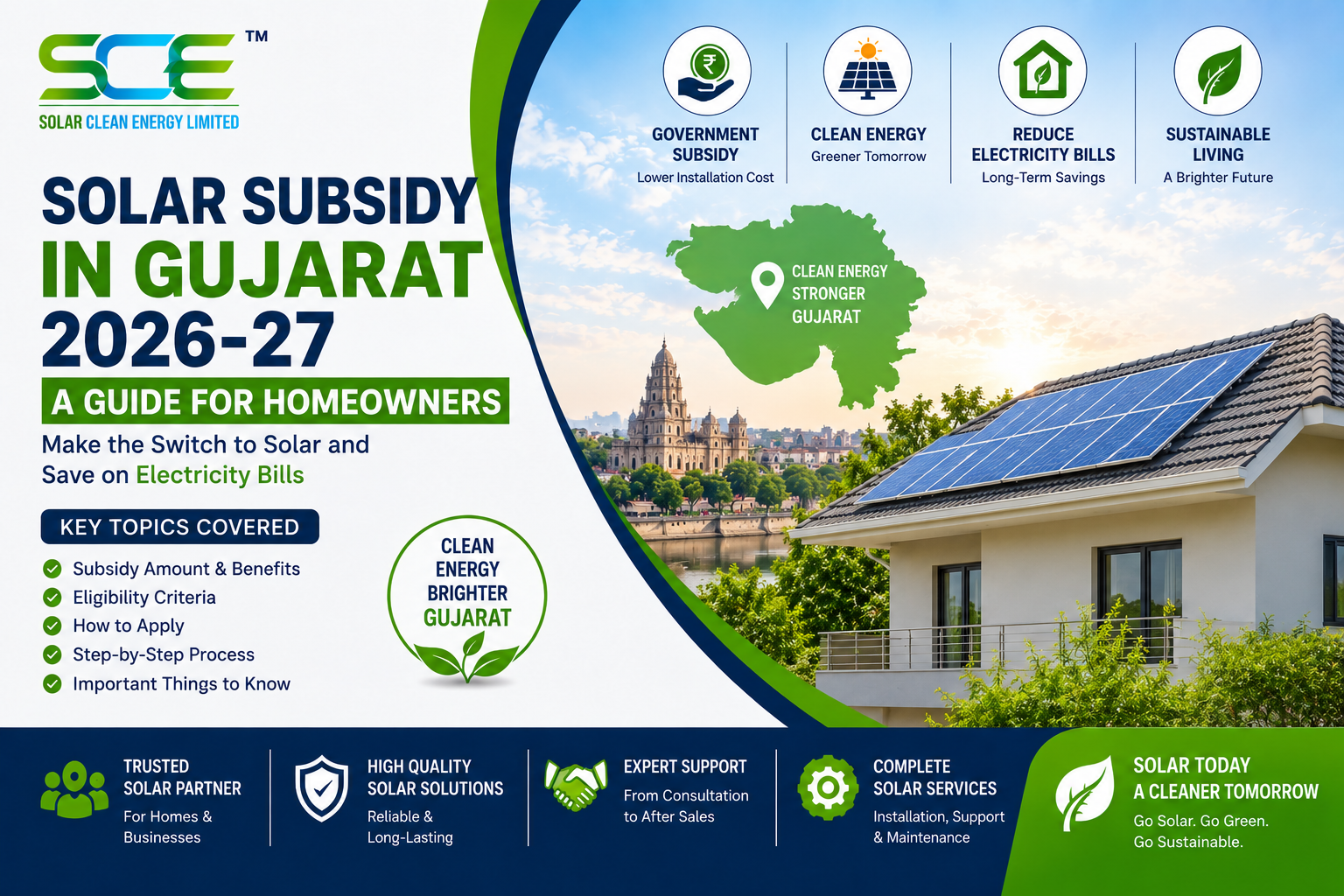
Solar energy is becoming an increasingly popular choice for homeowners in Gujarat who want to reduce their electricity expenses and generate clean energy from their rooftops. With government support available for Residential Rooftop Solar, installing a solar system can become more affordable.
If you are searching for information about solar subsidy in Gujarat 2026-27, this guide explains the PM Surya Ghar subsidy, eligibility, subsidy amount, application process and important things homeowners should know before installing rooftop solar
What Is the Solar Subsidy in Gujarat 2026-27?
For residential consumers, the major central government subsidy is provided through the PM Surya Ghar: Muft Bijli Yojana.
The scheme supports eligible households that install grid-connected rooftop solar systems. It aims to help households generate their own electricity and reduce their dependence on conventional grid power.
The PM Surya Ghar scheme targets rooftop solar installations in 1 crore residential households by FY 2026-27. The scheme’s implementation period is currently specified up to 31 March 2027.
For homeowners in Gujarat, the subsidy can significantly reduce the upfront cost of installing an eligible residential rooftop solar system.
How Much Solar Subsidy Is Available in Gujarat?
Under the current PM Surya Ghar central financial assistance structure, the subsidy is based on the installed rooftop solar capacity.
|
Solar System Capacity
|
Central Subsidy
|
|---|---|
|
1 kW
|
Rs 30,000
|
|
2 kW
|
Rs 60,000
|
|
3 kW
|
Rs 78,000
|
|
Above 3 kW
|
Maximum Rs 78,000
|
The central subsidy is calculated at ₹30,000 per kW for the first 2 kW and ₹18,000 for the additional 1 kW, with the central financial assistance capped at 3 kW. Therefore, the maximum central subsidy is ₹78,000 for a 3 kW or larger eligible residential system.
Is Solar Subsidy Available for Residential Homes in Gujarat?
Yes. The PM Surya Ghar scheme is a demand-driven programme under which residential consumers with a grid-connected electricity connection from the local DISCOM can apply through the National Portal.
This makes the scheme relevant for homeowners across Gujarat, including cities such as:
- Ahmedabad
- Gandhinagar
- Surat
- Vadodara
- Rajkot
- Bhavnagar
- Jamnagar
- Anand
- Mehsana
- Other areas of Gujarat
Who Is Eligible for Solar Subsidy in Gujarat?
Key requirements include:
- The electricity connection should be a residential grid-connected connection.
- The connection should be associated with the local DISCOM.
- The rooftop solar system must meet the applicable scheme requirements.
- The installation should follow the prescribed technical standards.
- The consumer should apply through the PM Surya Ghar National Portal.
- The installation should be completed through the applicable approved/vendor process.
- Required inspection and DISCOM procedures must be completed.
PM Surya Ghar Subsidy Calculation
1 kW Solar System
A qualifying 1 kW residential rooftop solar system can receive Rs 30,000 in central financial assistance.
2 kW Solar System
A qualifying 2 kW system can receive Rs 60,000 in central financial assistance.
3 kW Solar System
A qualifying 3 kW system can receive up to Rs 78,000 in central financial assistance.
Solar System Above 3 kW
If you install a system larger than 3 kW, the central subsidy does not continue increasing beyond the 3 kW cap. The maximum central financial assistance remains Rs 78,000 under the current structure.
Therefore, homeowners should select the solar system capacity based on electricity consumption, available rooftop space and future requirements rather than choosing a system size only according to the subsidy.
Why Choose Solar Clean Energy for Your Solar Installation?
Choosing the right Solar Installation partner is important when planning a residential rooftop solar project.
Solar Clean Energy provides Solar EPC Solutions for customers looking to adopt rooftop solar and renewable energy solutions. Before installation, homeowners should evaluate their electricity consumption, rooftop conditions, system requirements and applicable subsidy procedures.
If you are planning to install rooftop solar in Gujarat, a professional assessment can help you determine the appropriate system capacity and understand the installation process.
What Documents Are Required?
The application process is handled through the PM Surya Ghar National Portal.
The exact documents can vary depending on the application and DISCOM process.
- Latest electricity bill
- Electricity consumer number
- Residential electricity connection details
- Identity and contact information
- Bank account details
- Rooftop solar installation details
- Required vendor information
- Other documents requested during the online application
Frequently Asked Questions (FAQs)
Eligible residential consumers can receive central financial assistance under PM Surya Ghar. The current structure provides ₹30,000 for 1 kW, ₹60,000 for 2 kW and up to ₹78,000 for 3 kW or above.
The maximum central subsidy under the current PM Surya Ghar structure is ₹78,000 for eligible residential rooftop solar installations.
A 5 kW system may be eligible for the maximum applicable central subsidy, but the subsidy itself is capped at the 3 kW level. Therefore, the maximum central financial assistance remains ₹78,000 under the current structure.
You can apply through the PM Surya Ghar National Portal by registering your residential electricity connection and following the application, vendor selection, installation and verification process.
Yes. The PM Surya Ghar scheme is being implemented during FY 2026-27 and has a target of reaching one crore residential households. The current implementation period is through March 2027.
Conclusion
The solar subsidy in Gujarat 2026-27 can make residential rooftop solar more affordable for eligible homeowners. Under PM Surya Ghar, the current central financial assistance can reach ₹78,000 for a 3 kW or larger eligible residential rooftop solar system.
However, subsidy should not be the only factor when choosing a solar system. Homeowners should consider electricity consumption, rooftop space, solar panel quality, inverter specifications, installation quality, expected generation and long-term service support.
👉 Contact Solar Clean Energy to discuss your residential solar project and installation requirements.