


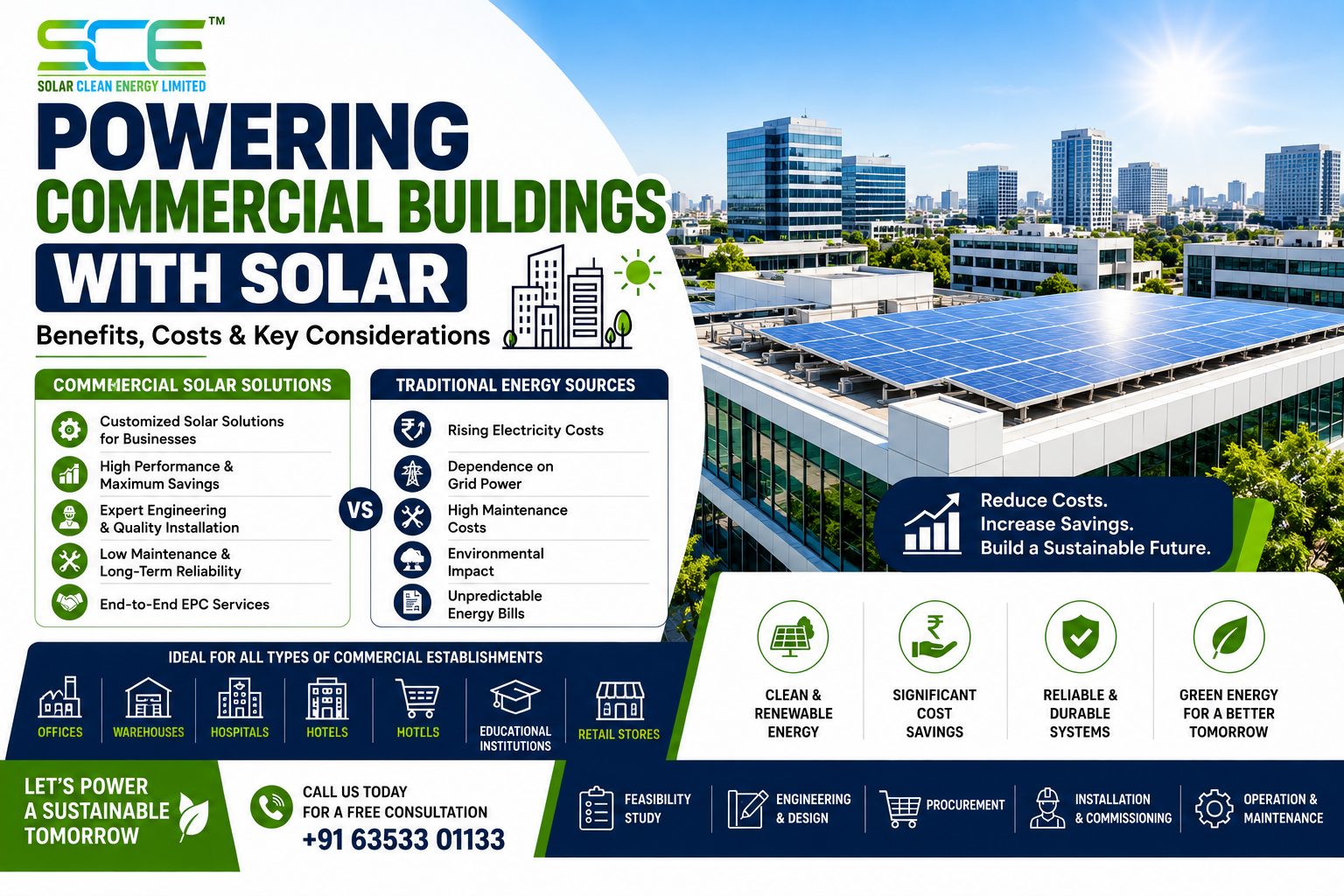
Commercial buildings consume a significant amount of electricity for lighting, air conditioning, elevators, computers, ventilation, security systems and other daily operations. As electricity costs continue to rise, businesses are increasingly looking for reliable and sustainable energy solutions.
A Solar system for commercial building can help businesses generate clean electricity from rooftop space, reduce dependence on conventional power and manage long-term energy expenses. With the right system design and professional installation, commercial solar can become an important part of a business’s energy strategy.
What Is a Solar System for Commercial Building?
A solar system for commercial building is a photovoltaic (PV) power system designed to generate electricity for commercial properties such as offices, warehouses, hotels, hospitals, shopping centers, educational institutions and retail buildings.
A typical commercial solar system may include:
- Solar panels
- Solar inverters
- Solar mounting structures
- DC and AC cables
- Electrical protection equipment
- Monitoring systems
- Grid connection components
Why Should Commercial Buildings Use Solar Energy?
Installing a solar system for commercial building can provide several advantages, including:
- Reduced electricity expenses
- Better utilization of rooftop space
- Lower dependence on grid electricity
- Clean and renewable energy generation
- Long-term energy savings
- Reduced carbon emissions
- Improved sustainability
- Better control over energy costs
Benefits of Installing Solar for Commercial Buildings
Reduce Electricity Costs
One of the main reasons businesses invest in commercial solar is to reduce electricity expenses.
A properly sized solar PV system can generate electricity during the day and offset a portion of the building’s electricity consumption. Actual savings depend on factors such as system capacity, electricity tariffs, energy usage and solar generation.
Make Better Use of Rooftop Space
Commercial buildings often have large rooftop areas that may not be used productively.
Installing solar panels allows businesses to convert available roof space into an energy-generating asset without requiring additional land for a solar project.
Reduce Dependence on Grid Power
A commercial solar system can reduce the amount of electricity purchased from the grid.
Generating electricity at the point of consumption can help businesses improve energy management and potentially reduce exposure to changing electricity costs.
Generate Clean and Renewable Energy
Solar power is a renewable source of energy that produces electricity without directly burning conventional fuels during generation.
Businesses can use solar energy to support environmental and sustainability objectives while reducing their overall carbon footprint.
Support Long-Term Business Savings
Solar installation requires an initial investment, but a properly designed system can generate electricity for many years.
The long-term financial benefits depend on installation costs, electricity tariffs, system performance, maintenance and energy consumption patterns.
Types of Commercial Buildings Suitable for Solar
Offices
Warehouses
Warehouses often have large, open rooftops that can provide suitable space for solar panels. Solar can help power lighting, ventilation, security systems and other electrical loads.
Hotels
Hotels have significant energy requirements from rooms, kitchens, lighting, air conditioning and common areas. Solar can contribute to their overall electricity requirements.
Hospitals
Hospitals require reliable electricity for lighting, HVAC systems, medical equipment and other critical operations. A professionally designed solar system can contribute to their energy needs.
Shopping Malls and Retail Buildings
Large retail properties can have substantial daytime electricity consumption. Rooftop solar can help offset part of this demand.
How Does a Commercial Solar System Work?
Solar Panels
Solar panels capture sunlight and convert it into direct current (DC) electricity.
The inverter converts the DC electricity generated by the solar panels into alternating current (AC) electricity that can be used by the building’s electrical systems.
Solar Mounting Structure
Mounting structures securely support the solar panels on the rooftop. The structure must be selected according to the roof type, panel layout, wind conditions and project requirements.
Electrical Protection System
Protection devices, cables and other electrical components help safely distribute and manage the generated electricity.
Commercial Solar Installation Process
Step 1: Site Survey
The Solar EPC team evaluates the rooftop, electricity consumption, shading, structural conditions and electrical infrastructure.
Step 2: System Design
Based on the site assessment, engineers develop the solar system layout and determine the appropriate system capacity.
Step 3: Engineering and Planning
Detailed electrical and structural planning is carried out to ensure the proposed system is suitable for the commercial building.
Step 4: Procurement
Solar panels, inverters, mounting structures, cables and other required components are sourced according to the project specifications.
Step 5: Installation
Solar panels and mounting structures are installed, followed by electrical connections and system integration.
Step 6: Testing and Commissioning
The complete system is tested to ensure that the components are operating correctly and safely before commissioning.
Step 7: Operation and Maintenance
Regular monitoring and maintenance help maintain system performance over its operating life.
Why Choose a Professional Solar EPC Company?
Professional solar EPC services can include:
- Site feasibility assessment
- Solar system design
- Engineering
- Solar mounting structure planning
- Equipment procurement
- Installation
- Testing
- Commissioning
- Operation and maintenance
Frequently Asked Questions (FAQs)
A solar system for commercial building is a photovoltaic (PV) system designed to generate electricity for offices, warehouses, hotels, hospitals, retail spaces and other commercial properties.
Commercial solar can help reduce electricity costs, utilize unused rooftop space, lower dependence on grid power and support sustainable business operations.
The cost depends on system capacity, solar panels, inverter, mounting structure, rooftop conditions, electrical work and installation requirements. A site assessment is recommended for an accurate estimate.
The required capacity depends on electricity consumption, daytime load, available rooftop area, shading and project requirements. A professional solar EPC company can assess these factors.
Many commercial buildings can accommodate rooftop solar, but the roof condition, structural strength, available area, shading and electrical infrastructure should be evaluated before installation.
Conclusion
A solar system for commercial building can help businesses reduce their dependence on conventional electricity, make productive use of rooftop space and support long-term sustainability goals.
From site assessment and system design to procurement, installation and commissioning, every stage of a commercial solar project requires careful planning.
For businesses looking for commercial solar solutions in Ahmedabad, Solar Clean Energy can provide customized solar EPC solutions based on the property’s energy requirements and available rooftop space.